
🍋🟩 ThirdSpace BUZZ: The Uncompromising Rise of Turkish Intelligence
How Ankara transformed a crumbling imperial relic into a high-tech, fiercely independent espionage empire.
ThirdSpace BUZZ is an edgy newsletter on whatever the fuck I want.
If you still think of international espionage as a polite parlor game played exclusively between Langley, Cheltenham, and the Lubyanka, it is time to recalibrate. While the old Cold War players continue their predictable, heavily bureaucratic dance, a highly kinetic, fiercely autonomous force has been quietly reshaping the geopolitical board from the Eastern Mediterranean to the Horn of Africa.
Welcome to the world of the Millî İstihbarat Teşkilatı (MİT)—Turkey’s National Intelligence Organization.
🍋🟩

Sponsored by:
Help us grow by sponsoring our newsletter and reaching an engaged community.


“War is the continuation of politics by other means.”
— Carl von Clausewitz

🍋🟩 The Bloodline of Asymmetric Survival
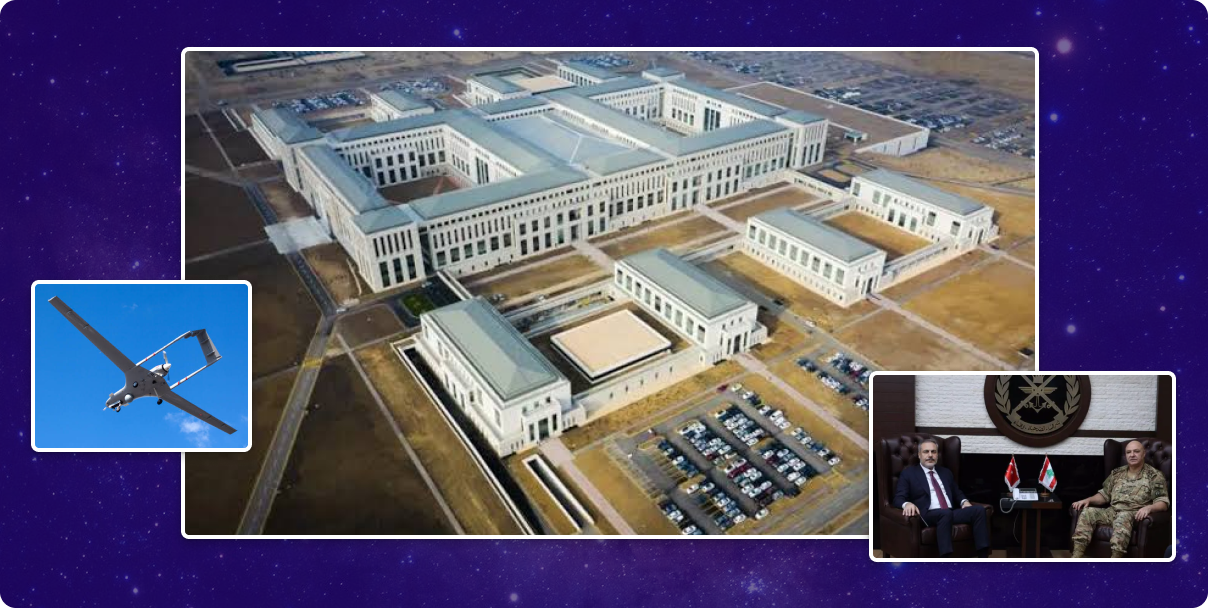
MİT doesn’t ask for permission, and it long ago stopped caring about keeping its allies comfortable. It is an agency that will burn a friendly nation’s deep-cover assets to make a point, snatch dissidents off foreign streets in broad daylight, and design the software to intercept the most sophisticated missile defense systems in the world. It is the invisible fist behind Turkey’s rise as an assertive, post-aligned middle power.
MİT became the most fascinating, ruthless, and technologically sophisticated intelligence apparatus of the 21st century. To understand MİT’s modern DNA, you must first understand the trauma of the late Ottoman Empire. In the early 20th century, as European powers circled the “Sick Man of Europe” like vultures, the crumbling Ottoman state realized traditional diplomacy was a luxury it could no longer afford. Survival required something far dirtier.
In 1913, Enver Pasha established the Teşkilat-ı Mahsusa (The Special Organization). This was not an agency designed for quiet file cabinet curation or polite diplomatic cocktail parties. It was a highly active, paramilitary irregular force designed for raw, asymmetric survival.
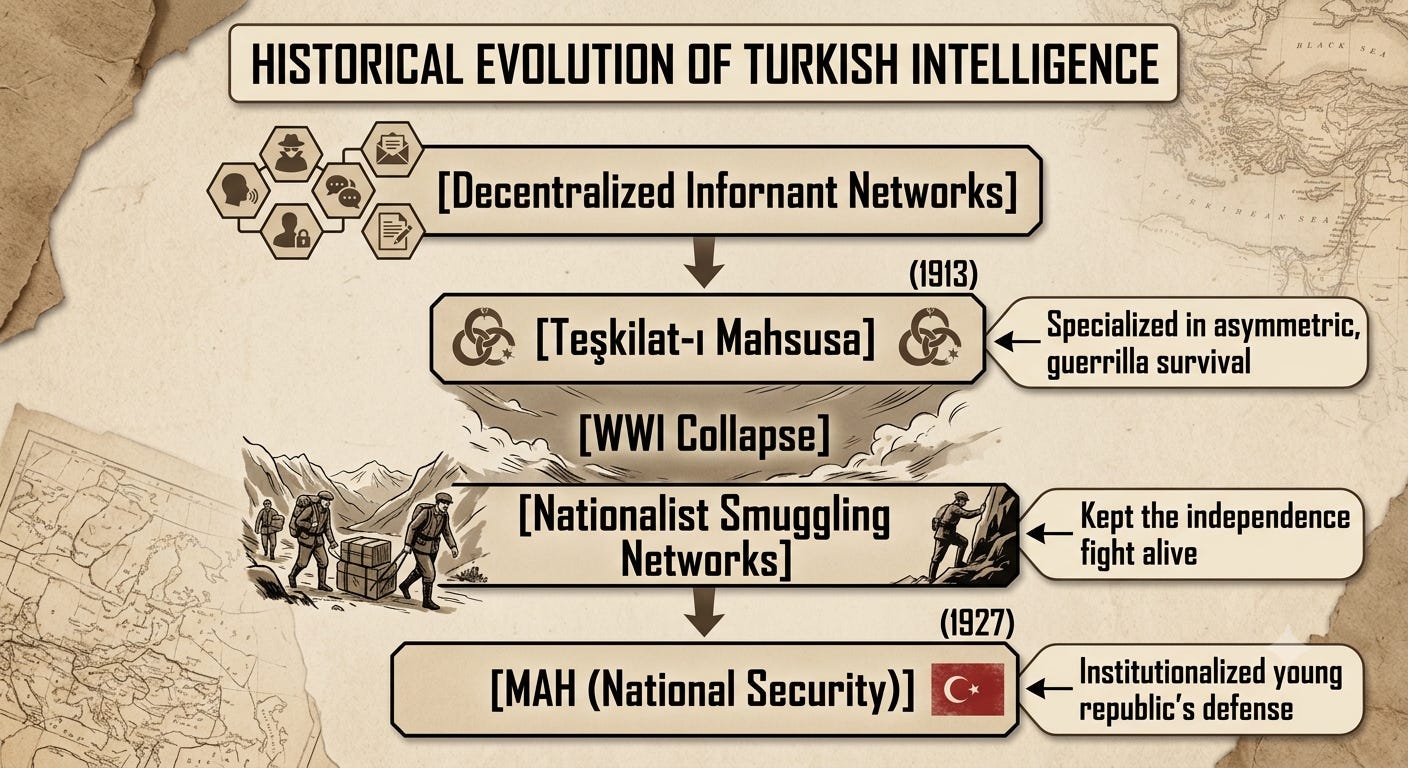
The Special Organization operated across the Balkans, North Africa, and the Caucasus, organizing local populations, executing psychological operations, and waging guerrilla warfare against British, French, and Russian forces.
When the Empire collapsed under the weight of World War I, the Special Organization did not simply vanish. Its veteran officers—hardened by years of irregular combat—smuggled arms, maps, and personnel out of occupied Istanbul to Anatolia. They became the logistical backbone of Mustafa Kemal Atatürk’s Turkish National Movement.
When the young Republic of Turkey was officially born out of the ashes, these intelligence operatives transitioned from desperate resistance fighters into the architects of a brand-new state security apparatus.
The Cold War and the Puppeteer’s Grip
Every new republic requires an anchor. In 1926, Atatürk ordered the formal institutionalization of Turkish intelligence, leading to the creation of the Millî Emniyet Hizmeti Riyaseti (MAH - National Security Service) in early 1927. The young state was fragile, surrounded by historical rivals and rocked by internal rebellions. The MAH’s mandate was absolute: defend the secular republic from all threats, foreign and domestic.
However, the geopolitics of the mid-20th century soon dragged Turkey out of its self-imposed isolation. Following World War II, as the Soviet Union cast a long, intimidating shadow over the Turkish Straits, Turkey made a historic pivot westward, officially joining NATO in 1952.
This pivot changed everything for the MAH. The agency became deeply integrated into Western intelligence frameworks. The CIA and MI6 flooded the Turkish security apparatus with funding, training, and cutting-edge surveillance gear.
But this assistance came with a heavy price. Throughout the Cold War, the MAH functioned largely as a geopolitical outpost for Western interests. Its primary, near-obsessive directive was to monitor and neutralize Soviet espionage, secure NATO’s southern flank, and aggressively suppress domestic communist or left-wing movements.
To many Turkish nationalists, this era felt less like a partnership and more like a loss of sovereignty, leaving a lingering institutional resentment that would eventually fuel the agency’s modern drive for total autonomy.
The Rise of MİT and the Shadow of the Military
By the mid-1960s, Turkey realized it needed a more cohesive, modern structure to handle its increasingly complex security environment. In 1965, the Turkish parliament officially dissolved the MAH, replacing it with the Millî İstihbarat Teşkilatı (MİT).
For the next four decades, MİT existed in a state of deep, structural schizophrenia. The agency was structurally split between gathering foreign intelligence and acting as a domestic political watchdog. Furthermore, its leadership was heavily dominated by the Turkish military, which viewed itself as the ultimate custodian of Atatürk’s secular republic.
During this period, MİT’s history was marred by dark domestic scandals, none more explosive than the Susurluk Incident of 1996.
On a rainy November evening in 1996, a Mercedes-Benz crashed into a truck near the quiet town of Susurluk. The wreckage pulled back the curtain on Turkey’s deep state (derin devlet). Dying alongside each other in that single vehicle were:
Hüseyin Kocadağ: A high-ranking Istanbul police chief.
Sedat Bucak: A member of parliament commanding a powerful state-backed anti-PKK militia.
Abdullah Çatlı: A convicted ultra-nationalist hitman, international drug trafficker, and fugitive wanted by Interpol.
The trunk of the car contained a terrifying stash of illegal firearms, silencers, and fake diplomatic credentials signed directly by Turkey’s Interior Minister.
The Susurluk scandal exposed a dark truth: during the height of Turkey’s asymmetric war against Kurdish separatists in the 1980s and 90s, rogue factions within MİT and the police had actively partnered with mafia figures, right-wing militants, and drug smugglers to carry out extrajudicial executions and run lucrative illicit operations under the convenient shield of national security.
Yet, even during this era of deep-state instability, MİT was capable of pulling off spectacular, highly professional international operations. The most famous was the 1999 capture of PKK founder Abdullah Öcalan.
After being expelled from his safe haven in Syria under Turkish military threats, Öcalan became the target of a high-stakes, international chase. MİT tracked him across Europe and Africa, finally locating him at the Greek embassy in Nairobi, Kenya. In a meticulously planned operation, MİT operatives intercepted Öcalan as he was being driven to Nairobi’s airport, drugged him, and whisked him away on a private jet back to Turkey, delivering a massive blow to the PKK insurgency.
The Fidan Doctrine and the Tech-First Pivot
In 2010, a young, civilian academic and diplomat named Hakan Fidan was appointed to lead MİT. His arrival marked the beginning of a radical transformation that would completely rewrite Turkey’s intelligence doctrine.
Fidan’s vision was clear: MİT needed to shed its domestic political baggage, break free from military influence, and transform into a highly centralized, tech-driven foreign intelligence powerhouse.
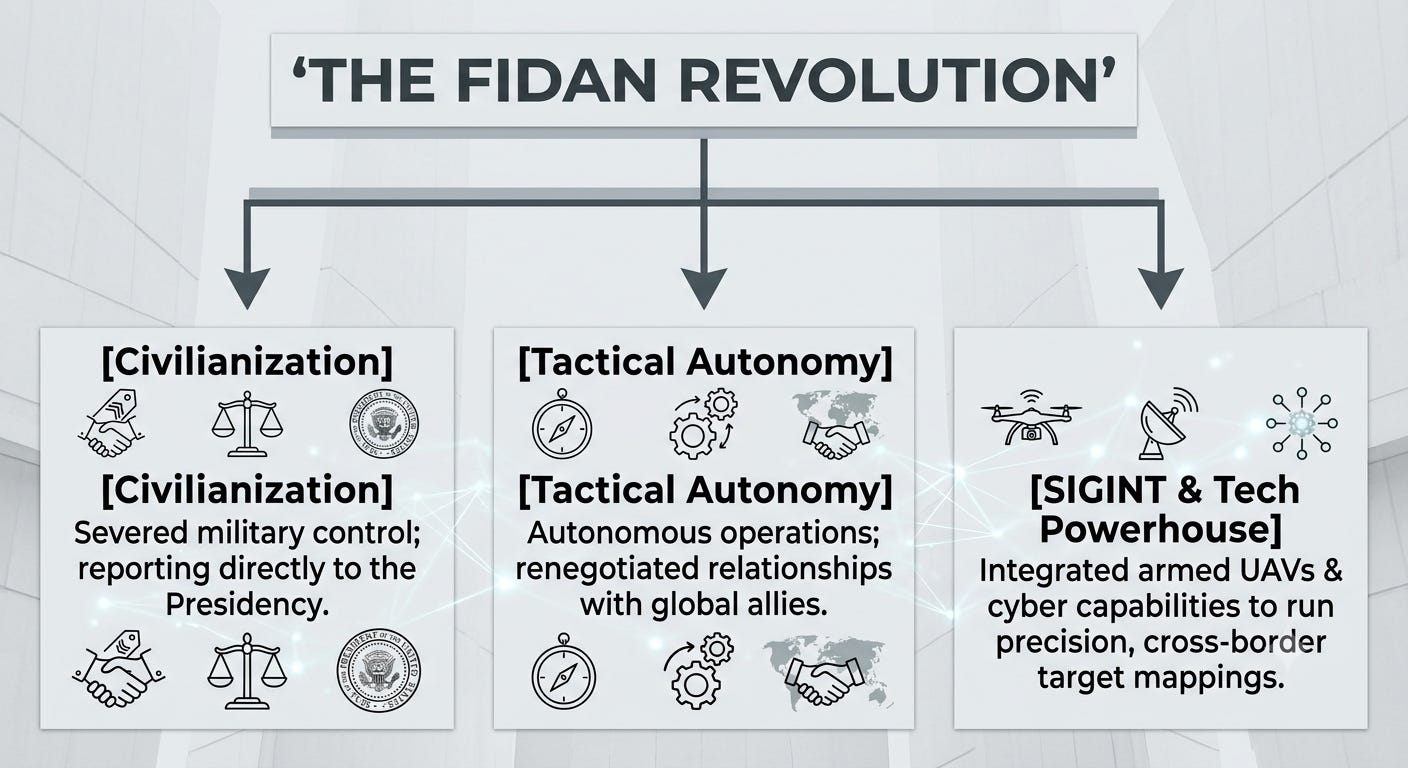
Under Fidan’s direction, MİT consolidated its domestic security duties, handing them off to the police and gendarmerie, while focusing its immense resources outward. Fidan also oversaw a massive structural reorganization that put MİT firmly under civilian, presidential control, shielding the agency from military interference.
Perhaps the most significant change was MİT’s embrace of high technology. The agency built a massive, state-of-the-art signals intelligence (SIGINT) infrastructure and formed a close, symbiotic relationship with Turkey’s rapidly growing domestic defense sector.
Instead of relying on foreign intelligence feeds, MİT integrated Turkish-made armed drones, such as the Bayraktar TB2, directly into its operational loop. This allowed MİT to map hostile networks in real time and execute precision drone strikes in northern Iraq and Syria without needing to coordinate with—or seek permission from—foreign allies.
Tactical Boldness and Global Friction
This newly acquired autonomy quickly brought MİT into direct conflict with its traditional allies, particularly Israel and the United States.
Burning the Mossad Network
The complex, often bitter intelligence rivalry between Turkey and Israel reached a dramatic peak in the early 2010s. Following the 2010 Mavi Marmara flotilla incident, diplomatic relations between Ankara and Tel Aviv collapsed. MİT, under Fidan, decided to send a blunt message to its Israeli counterparts.
In 2013, reports surfaced that Turkey had deliberately disclosed the identities of up to ten Iranian assets who had been secretly traveling into Turkey to meet face-to-face with their Mossad handlers. By handing this highly sensitive dossier directly to Tehran, MİT effectively decimated Israel’s human intelligence infrastructure inside Iran. It was a cold, calculated move that signaled a new reality: Turkey would no longer respect traditional “gentlemen’s agreements” if it felt its own regional interests were being marginalized.
The MİT Trucks Scandal (2014)
This fierce pursuit of independent foreign policy objectives occasionally backfired spectacularly on the domestic stage. In January 2014, local prosecutors and military police in Adana—acting on an anonymous tip—pulled over a convoy of cargo trucks bound for the Syrian border.
Civilian MİT officers escorting the convoy forcefully resisted the search, leading to an incredibly tense, armed standoff on the side of a busy highway. When the trucks were eventually forced open, investigators found heavy military-grade weaponry hidden beneath layers of humanitarian medical supplies.
The incident sparked a massive political firestorm. While critics accused MİT of illegally running weapons to radical Islamist factions fighting the Assad regime, the Turkish government insisted the cargo was destined for Turkmen rebels. The fallout was swift: the government executed massive purges of the police and prosecutors involved, and subsequently passed sweeping legislation that granted MİT operatives absolute legal immunity for their operations.
Transnational Repression
Following the failed coup attempt of July 2016, MİT’s domestic mandate returned with a vengeance, but with a global twist. The Turkish state designated the followers of cleric Fethullah Gülen (FETÖ) as its primary national security threat and task-managed MİT to hunt them down globally.
Rather than navigating tedious, bureaucratic international extradition processes, MİT pioneered an aggressive, global campaign of extrajudicial abductions.
In Kosovo (2018), MİT agents, in collusion with sympathetic local security officials, snatched six Turkish educators off the streets and flew them to Turkey on a private jet, triggering a massive domestic political crisis that cost Kosovo’s interior minister his job.
Similar covert operations were carried out in Kenya, Moldova, and Mongolia, resulting in the repatriation of over a hundred high-profile targets.
Snatched from the Shadow of Mossad
MİT’s growing prowess in cyber-espionage and counter-intelligence was put on full display in the remarkable case of Omar A., a brilliant young Palestinian hacker living in Turkey.
Omar had gained legendary status among intelligence circles after reportedly writing a software code that successfully bypassed Israel’s sophisticated “Iron Dome” missile defense system. Desperate to recruit or neutralize him, Mossad reportedly tried to lure him out of Turkey with fake, lucrative European job offers. Recognizing the trap, MİT’s cyber-intelligence wing stepped in, warning Omar and placing him under active surveillance and protection.
In 2022, while Omar was on a vacation in Malaysia, a local kidnap team hired by Mossad snatched him off the streets of Kuala Lumpur. He was taken to a remote cabin, tied to a chair, and interrogated via video link by handlers in Tel Aviv.
But MİT had been tracking the entire operation. Turkish intelligence analysts in Ankara pinpointed the exact GPS coordinates of the Malaysian safehouse, handed the data directly to Malaysian special forces, and coordinated a lightning raid that rescued Omar just hours before he was to be extracted. MİT brought him safely back to Istanbul, demonstrating a formidable global reach in protecting its intelligence assets.
The Strategic Ledger of Enmity and Alliance
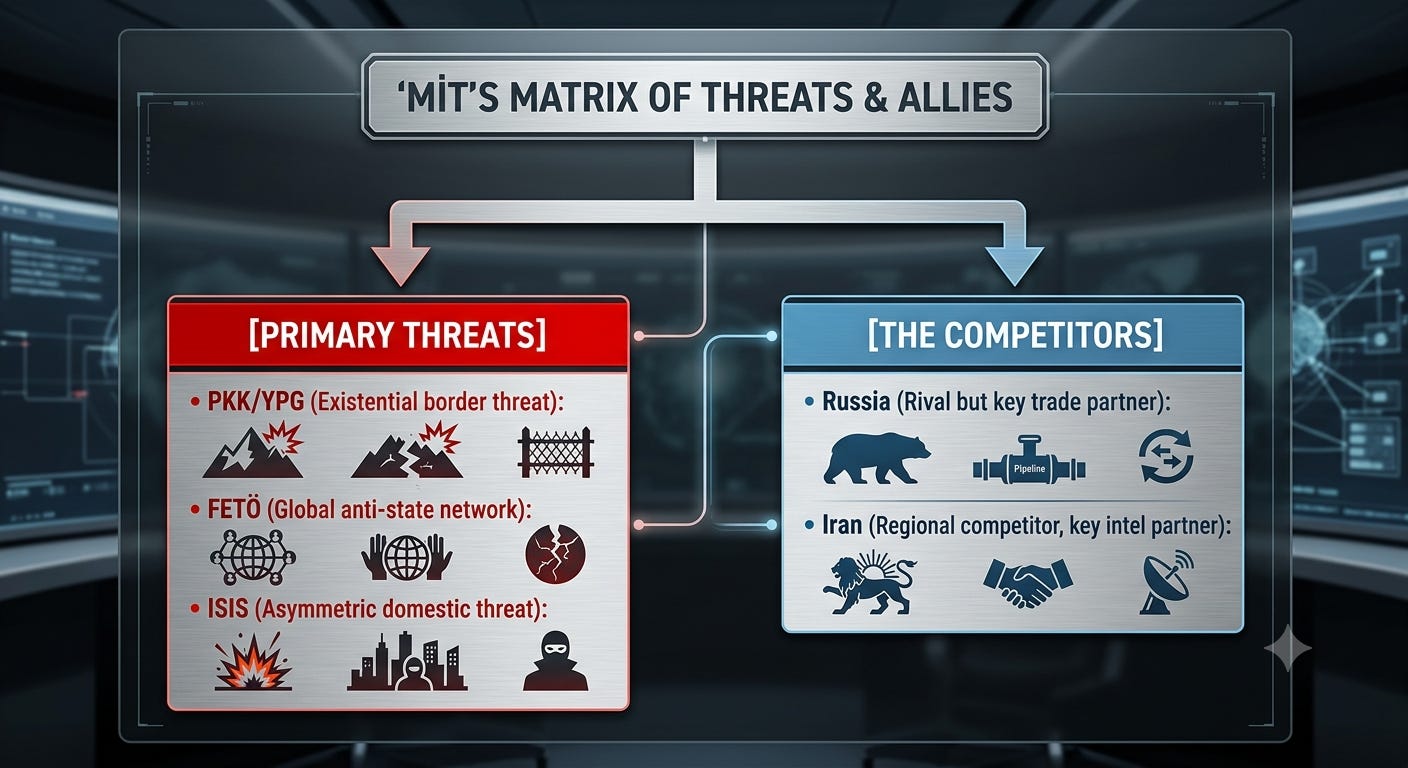
To understand how MİT navigates the modern world, one must understand how Turkey defines its threats and opportunities. MİT’s worldview is pragmatic, transactional, and intensely nationalistic.
The Threats
The PKK & YPG: This remains Turkey’s absolute red line. MİT treats any Kurdish military presence along its Syrian and Iraqi borders as an existential threat, dedicating the vast majority of its kinetic operations to dismantling their leadership.
FETÖ: The Hunt continues. MİT operates a relentless, global counter-intelligence campaign targeting Gülenist financial and political networks across Europe, Africa, and North America.
ISIS / Daesh: After suffering devastating domestic terrorist attacks, Turkey shifted its intelligence resources to aggressively target ISIS cells inside Turkey and northern Syria.
The Competitors
Unlike Western agencies, which tend to view rivals in black-and-white terms, MİT excels at navigating the gray zones.
Russia: While historically rivals and on opposite sides of bloody conflicts in Syria, Libya, and the Caucasus, MİT maintains highly active, pragmatic backchannels with Moscow. MİT’s mediation has facilitated historic prisoner swaps and grain negotiations during the war in Ukraine.
Iran: Despite deep geopolitical competition over regional dominance, MİT maintains close intelligence cooperation with Tehran on border security and anti-PKK operations.
The Independent Spymaster
The evolution of Turkish intelligence from the desperate, survivalist maneuvers of the Teşkilat-ı Mahsusa to the high-tech, global reach of modern MİT is a testament to Turkey’s broader geopolitical ambitions. Under the leadership of figures like Hakan Fidan and his successor, İbrahim Kalın, MİT has successfully built an agency that mirrors Turkey’s modern identity: fiercely sovereign, technologically self-reliant, and utterly unapologetic.
When Western allies praise Turkish intelligence, it is not out of simple affection; it is a recognition of raw, undeniable utility. They know that while Turkey can be a deeply frustrating, independent partner, it also possesses the unique regional access, operational teeth, and tactical fearlessness that NATO simply cannot afford to lose.
In the high-stakes theater of modern espionage, MİT has made it abundantly clear: Turkey is no longer just a square on someone else’s chessboard. It is actively moving the pieces.

Help us grow by advertising your business in our newsletter and reaching an engaged community.
