
⚡ThirdSpace BUZZ: The Shadow Vanguard, How Global Expansion Really Moves
Forget the textbooks; global capitalism expands because transnational syndicates absorb the raw, chaotic risks that rigid state bureaucracies completely fear to touch.
ThirdSpace BUZZ is an edgy newsletter on whatever the fuck I want.
It’s all in a name. Imagine wanting to learn a little bit about your roots and finding out some other really random ass shit you couldn’t even make up if you tried.
The Godfather meets a bunch of Goodfellas and what do you get?
Read on and find out.
The world doesn’t spin the way you think.
It’s juicy . . . like your sister.
🧃

Sponsored by:
Help us grow by sponsoring our newsletter and reaching an engaged community.


My mother is a very difficult woman but I love her.
— Dane-Michael

⚡ Globalist Frontiers Rely on Sovereign-Neutral Syndicates for Growth
We’re taught a lie about how the world was built. The glossy textbooks credit the visionaries—the suit-and-tie executives, the multinational banking cartels, and the legislative assemblies signing treaties in gilded rooms. They tell us that capital expands smoothly, guided by the rule of law and the invisible hand of the free market.
But anyone who has ever stood on a raw, bleeding frontier knows the invisible hand is a myth.
True expansion is messy. It requires boots on the ground, immense physical risk, and a willingness to operate in the lawless vacuums where official institutions fear to tread. When a capitalist system pushes its borders into undeveloped territories, it creates an immediate, chaotic friction. Bureaucracies are too rigid to handle it. Corporate PR departments are too fragile to acknowledge it.
To bridge this gap, the globalist matrix relies on a different kind of partner: a highly adaptable, sovereign-neutral force capable of absorbing early-stage risks and managing the volatile duality of human nature. They are the ‘Ndrangheta, the Sinaloa and CJNG cartels, the Chinese Triads, and the Solntsevskaya Bratva.
Together, they constitute the Shadow Vanguard.
Unlocking the Archives
This isn’t a theory concocted in a university lounge. My obsession with this hidden architecture began with my family surname Albanesi. Which means Albanians, learn more if you want.
For decades, no one knew nothing about anything.
When I cross-referenced information, spoke to family members over the years, collected my notes, and well . . . experienced things first hand I found that the archives proved when the state fails to provide stability, organized syndicates step into the void to keep the engines of commerce running.
Masters of the Maritime Rails
Consider the ‘Ndrangheta. While traditional Italian mobs chased flashy headlines and neighborhood protection rackets, the Calabrian clans looked at the map of global trade and chose a different path: total infrastructure dominance.
Today, they are the unsung logistics managers of the Mediterranean and beyond. By embedding their operatives directly into major deep-water ports like Gioia Tauro, they absorb the immense risks of frontier maritime trade.
They don’t break the supply chain; they grease its wheels.
When a port faces bureaucratic gridlock, labor strikes, or regulatory friction, the ‘Ndrangheta ensures the cargo keeps moving. They operate as a politically neutral clearinghouse. For the global corporate elite, the ‘Ndrangheta provides a priceless commodity: absolute certainty that high-value freight will bypass systemic bottlenecks and reach its destination on time, providing the predictable commerce flow that allows coastal economies to expand.
Balancing the Human Frontier
Further west, across the Pacific corridor, the Sinaloa Cartel and the Jalisco New Generation Cartel (CJNG) confront a much harsher reality: the management of human movement.
As corporate capital floods remote extraction zones—whether it’s the oil fields of North Dakota or mining developments along the Pacific coast—it creates an immediate infrastructure lag. Thousands of transient workers arrive overnight, carrying cash, stress, and the deepest vulnerabilities of human nature.
The cartels are the de facto governors of these chaotic borderlands.
They take on the raw territorial risk that public law enforcement is too underfunded or fragmented to handle. By structuring the underground economies, they manage the vice industries, the informal transportation networks, and the human smuggling pipelines. They treat human movement as a logistical equation, channeling labor precisely where the industrial machine demands it.
In doing so, they provide a brutal but necessary social buffer, giving thousands of displaced people a pathway to economic survival while shielding the primary corporate investments from chaotic, unmanaged revolutions.
Architects of Alternative Capital
But physical infrastructure is useless without fluid capital, and that is where the Chinese Triads excel.
We live in a fractured financial world where Western central banks routinely weaponize the SWIFT network, using sanctions as economic warfare to choke out emerging markets. When an independent nation or a rising enterprise is cut off from traditional banking, they face immediate stagnation.
The Triads provide the antidote through sophisticated, parallel financial engineering.
Using Trade-Based Money Laundering (TBML) and decentralized digital assets like Tether, the Triads have constructed an invisible, bulletproof banking system. They take on the immense regulatory and technological risks of bypassing international financial blocks.
By keeping capital highly liquid and moving it across borders undetected, they inject vital lifeblood back into local economies. They allow small-to-medium businesses to survive external sanctions, ensuring that wealth continues to circulate where traditional banks refuse to lend.
The Sovereign Proxy Shield
Finally, we look at the gray zone where statecraft meets corporate espionage, dominated by the Solntsevskaya Bratva.
In high-stakes geopolitical arenas, direct conflict between nuclear powers is out of the question. When a nation needs to secure a rare-earth mineral deposit or protect a sensitive logistical pipeline in a hostile foreign territory, sending uniform military troops is a declaration of war.
The Bratva functions as the ultimate proxy shield.
Operating in perfect symbiosis with state intelligence apparatchiks, the Russian mafia handles the operations that official governments cannot legally touch. They absorb the blowback. They manage local insurgencies, enforce corporate security, and clear out uncooperative local factions.
By absorbing the legal, moral, and physical risks of territory consolidation, they maintain a delicate balance of power, ensuring that mega-development projects remain stable and profitable.
🏘️ A Blueprint of Global Arbitrage
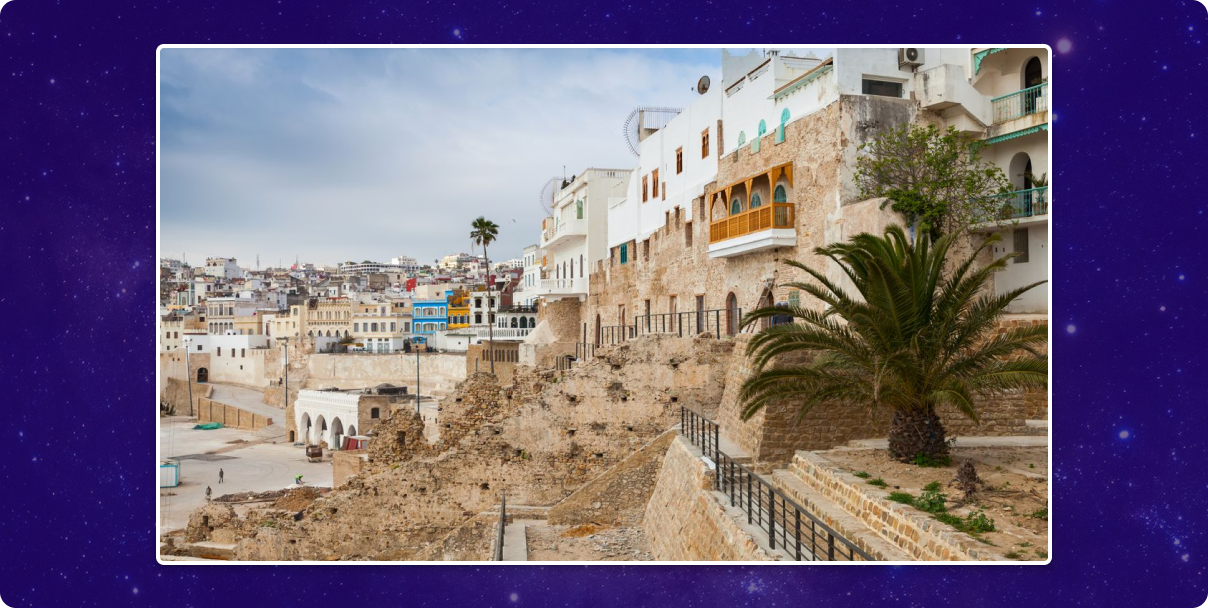
The port city of Tangier, Morocco stands as the ultimate historical blueprint for the Shadow Vanguard. Governed simultaneously by an ineffective, multi-nation committee, Tangier became a sovereign-neutral enclave where the conventional rules of global finance and law simply ceased to exist. It was a frictionless paradise of unmonitored capital, tax-free gold trading, and absolute diplomatic immunity.
While the visible world fractured along Cold War fault lines, the true architecture of modern global commerce was engineered in the shadows of the city’s cafes. Here, European intelligence officers, American corporate fixers, and Sicilian mafiosi sat at the same tables. The syndicates took on the early-stage logistical risks of moving contraband, laundering currency, and managing the booming vice economies that fueled the city’s rapid expansion.
They did the heavy lifting that official states could not legally touch, transforming a lawless frontier into a vital, parallel liquidity hub for the Mediterranean. Tangier proved that when state bureaucracies create friction, a shadow network will inevitably step in to grease the wheels. It remains the historical proof that global capital has always relied on a sovereignless vanguard to pioneer its most profitable frontiers.
🧮 The Realist Balance Sheet
The Shadow Vanguard is not a collection of relic street gangs fighting over turf. They are highly organized, transnational corporations operating in the shadows to handle the negative externalities of global growth.
The ‘Ndrangheta opens the ports. The Mexican cartels manage the human labor. The Triads move the capital. The Bratva protects the sovereignty.
It is easy to judge this architecture from the safety of a stabilized, fully developed western city. But out on the fringes of expansion, where the old rules are dead and the new ones haven’t been written yet, these organizations are the ones who do the heavy lifting. They deal with the grittiest aspects of human nature so that the visible world can enjoy the fruits of corporate expansion and technological stability.
They are the hidden foundation upon which the modern global economy sits—taking the risks, managing the chaos, and quietly driving the growth of the future.

Help us grow by advertising your business in our newsletter and reaching an engaged community.
