
⚡ThirdSpace BUZZ: Inside the Rise, Fall, and Bloodfeuds of the Canadian Mafia
The Montreal-New York Syndicate
ThirdSpace BUZZ is an edgy newsletter on whatever the fuck I want.
For over half a century, Montreal served as the northern jewel in the crown of North American organized crime.
What began as a strategic satellite outpost for the Bonanno crime family evolved into an independent, multi-billion-dollar empire.
🍌

Sponsored by:
Help us grow by sponsoring our newsletter and reaching an engaged community.


Be nice to people on your way up because you’ll meet them on your way down.
— Wilson Mizner

⚡ The Foundation and the Calabrian Era
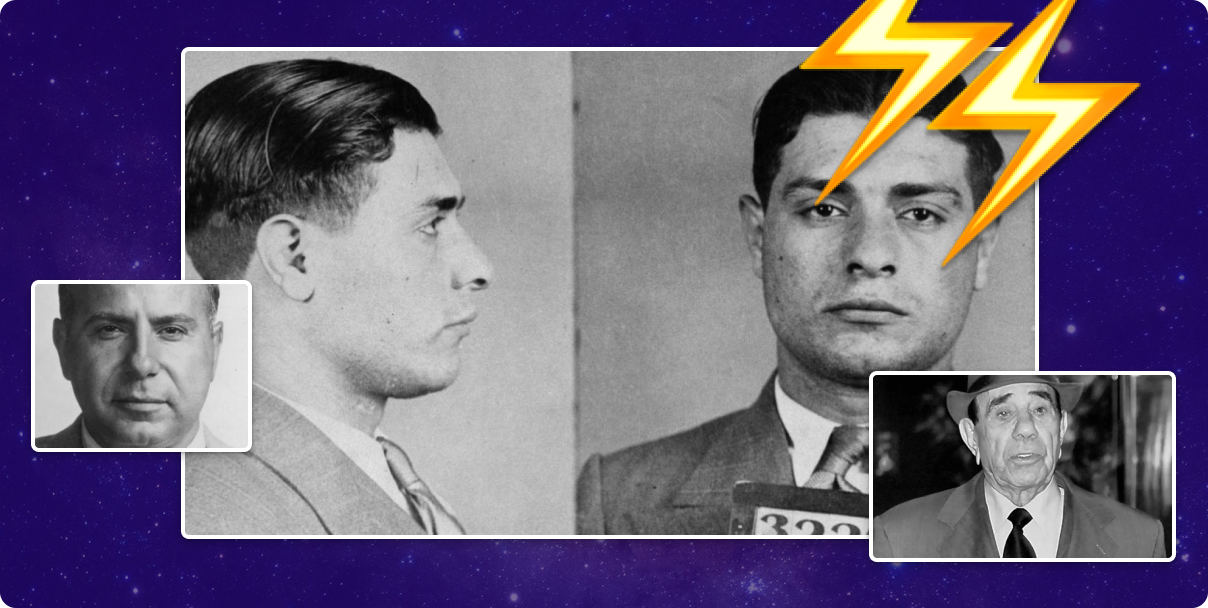
The blueprint of the Montreal underworld was drafted in the mid-20th century by Vincenzo “Vic” Cotroni. Born in Calabria, Italy, in 1911, Cotroni immigrated to Montreal as a child during the Prohibition era. Operating under the street alias “The Egg,” Cotroni briefly masked his illicit muscle as a professional wrestler named “Vic Vincent” before building a formidable, highly organized criminal enterprise.
By the 1930s, Cotroni understood that enduring underworld power required political protection. He and his crew established themselves as indispensable political enforcers during Montreal’s notorious “baseball bat elections.” By deploying physical violence, intimidating voters, and stuffing ballot boxes, Cotroni ensured victories for corrupt local politicians. In return, his growing syndicates were granted long-term immunity from law enforcement, laying the groundwork for a criminal monopoly.
Recognizing the strategic value of the Canadian port city, New York’s Bonanno crime family formally absorbed Cotroni’s crew as an official “decina” (faction) of their American network. In the 1950s, the ruthless Bonanno powerhouse Carmine “Lilo” Galante was dispatched to Montreal to oversee operations. Together, Cotroni and Galante revolutionized international narcotics trafficking. They integrated Montreal into the historic “French Connection” pipeline, importing raw opium from Europe and Turkey through Canada, refining it, and flooding the streets of New York City with high-grade heroin. Montreal became an untouchable logistical hub.
The Sicilian Revolt and the Rise of the Rizzutos
By the late 1970s, the operational dynamics of the Montreal family began to fracture along deep-rooted ethnic lines. Vic Cotroni, suffering from failing health, stepped back from daily operations and delegated authority to his fiercely aggressive Calabrian underboss, Paolo Violi. This internal promotion alienated an ambitious, wealthy, and deeply connected faction of Sicilian mobsters led by Nicolò Rizzuto.
The Sicilians grew weary of sending a significant percentage of their lucrative drug profits down the pipeline to the Calabrian leadership and, by extension, the Bonanno bosses in New York. A bitter, clandestine turf war erupted. Nicolò Rizzuto orchestrated a systematic coup against the Cotroni loyalists. The apex of this bloody transition occurred in 1978 when Paolo Violi was cold-bloodedly assassinated. Violi’s brothers were murdered shortly thereafter.
Rather than retaliating, an aging Vic Cotroni accepted the shifting tides, retreating into a quiet, advisory role until his death from natural causes in September 1984. The Calabrian monopoly was dead; the Sicilian Rizzuto crime family seized control.
Under the brilliant leadership of Nicolò’s son, Vito Rizzuto, the family entered its “Golden Era.” Vito was a master diplomat. Unlike his predecessors, he realized that open violence disrupted profit margins. He formed a highly sophisticated, multi-ethnic coalition, negotiating historic peace treaties and profit-sharing ventures with the Hells Angels, the Irish-Canadian West End Gang, and powerful street gangs.
The Rizzuto family transformed into a corporate-style syndicate, laundering billions of dollars through legitimate enterprise. They infiltrated Montreal’s multi-billion-dollar construction industry, real estate developments, and municipal projects, effectively taxing the city’s infrastructure while expanding their international cocaine and heroin networks to unprecedented heights.
The New York Blood Pact – The Three Captains Murder

While the Rizzuto family enjoyed massive independence, their historical blood ties to New York’s Bonanno family remained legally and operationally binding. The definitive proof of this connection dates back to one of the most famous executions in American Mafia history: the May 5, 1981, “Three Captains” murder.
In 1981, the Bonanno crime family was locked in a fierce internal civil war. The official boss, Philip Rastelli, and his top captain, Joseph Massino, faced a powerful coup attempt orchestrated by three rebellious capos: Alphonse “Sonny Red” Indelicato, Philip Giaccone, and Dominick “Big Trin” Trinchera. Fearing an imminent ambush, Massino decided to strike first.
To guarantee absolute operational secrecy and ensure the execution went flawlessly, Massino bypassed his New York soldiers and reached out to Canada, requesting the lethal services of Montreal’s rising star, Vito Rizzuto.
Vito Rizzuto and a fellow Canadian mobster flew covertly into New York. Massino lured the three rebel captains to a fake peace meeting at the 20/20 Night Club in Brooklyn. When the targets walked into the designated room, Vito Rizzuto and three other hitmen burst out of a hidden supply closet wearing ski masks. Rizzuto’s specific role was critical: he leaped forward, blocking the exit, and shouted, “It’s a holdup!” This split-second distraction stunned the seasoned New York captains, preventing them from drawing their weapons before the remaining gunmen executed them in a hail of bullets. This infamous triple homicide later served as the dramatic focal point for the 1997 Hollywood film Donnie Brasco.
For nearly twenty-five years, Vito Rizzuto ruled Canada untouched, believing his role in the New York hit was permanently buried. However, in 2004, the FBI successfully flipped Joseph Massino, who became the first official boss of a New York family to turn government informant. Massino exposed the Canadian hitman, leading to Vito Rizzuto’s sudden arrest at his Montreal mansion. Following a grueling legal battle, Rizzuto was extradited to the United States in 2006, pleading guilty to racketeering conspiracy charges and receiving a 10-year prison sentence.
The Ironworker’s Ambition and the Twilight of the Gods
Vito Rizzuto’s imprisonment created an unprecedented power vacuum in Montreal. Seeing the mighty Rizzuto family completely leaderless, rival forces converged on the city. The most aggressive challenger was an ambitious outsider from New York: Salvatore “Sal the Ironworker” Montagna.
Born in Montreal but raised in Sicily and New York, Montagna rose with meteoric speed within the fractured New York underworld. By 2004, at the age of just 36, he became the acting boss of the Bonanno crime family, earning the tabloid nickname the “Bambino Boss.” However, because he never secured official U.S. citizenship, a criminal contempt conviction allowed immigration authorities to strip his green card, resulting in his deportation to Canada in 2009.
Montagna arrived in Montreal determined to rebuild his empire by seizing the Rizzuto crown. He formed a hostile rebel alliance with Raynald Desjardins—a powerful, disaffected Rizzuto insider—and veteran mobster Joe Di Maulo. This coalition launched a devastating campaign to systematically dismantle the Rizzuto dynasty. Between 2009 and 2010, they struck the heart of the family, assassinating Vito’s eldest son, Nicolo Rizzuto Jr., and sniper-killing the 86-year-old patriarch, Nicolò Rizzuto Sr., inside his own home.
Yet, the alliance built on blood quickly turned inward. By late 2011, Montagna and Desjardins locked horns over the division of lucrative loan-sharking and bookmaking territories. In September 2011, Desjardins narrowly survived a targeted hit. Blaming Montagna, Desjardins retaliated instantly. On November 24, 2011, Montagna was lured to a suburban home in Charlemagne, Quebec. Gunmen opened fire, and a desperate Montagna leaped into the freezing waters of the L’Assomption River to escape, but succumbed to his gunshot wounds on the riverbank.
The Current Landscape
The assassination of the “Bambino Boss” signaled the end of the coalition trying to replace the Rizzutos, and Canadian authorities quickly arrested Desjardins, sentencing him to prison. When Vito Rizzuto was released from U.S. prison in late 2012, he returned to Canada as a vengeful ghost, unleashing a bloody, international clean-up campaign against anyone who had betrayed him, before his sudden death from natural causes in December 2013.
Today, the absolute monopoly once enjoyed by the Rizzuto family is a relic of the past. The Montreal Mafia operates under a highly fractured, decentralized, and volatile alliance led by surviving figures like Vito’s son, Leonardo Rizzuto. While they remain heavily entrenched in international drug importation and sophisticated money laundering schemes, they are constantly challenged by rival street syndicates and independent factions. The era of the all-powerful “Godfather of Canada” has closed, leaving behind a legacy carved in concrete, politics, and blood.
🏘️ The Rizzuto Era Headquarters
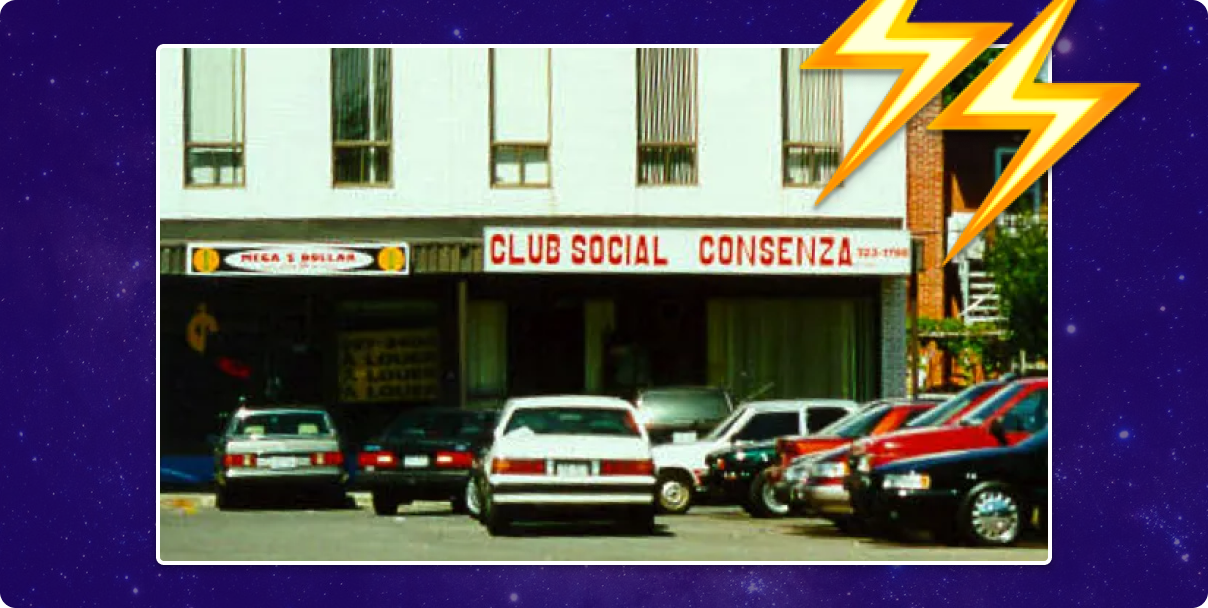
The Cosenza Social Club in St-Léonard, Montreal, functioned as the covert, top-level headquarters for the Sicilian Rizzuto crime family. Operating under the guise of a neighborhood café, the location was the nerve center where patriarch Nicolo Rizzuto managed major drug deals, construction extortion, and illicit financial operations.

Help us grow by advertising your business in our newsletter and reaching an engaged community.
