
⚡ThirdSpace BUZZ: Carlo Gambino, The Quiet Architect of Modern American Mafia Power
From Sicilian stowaway to the most powerful and respected don in U.S. organized crime history.
ThirdSpace BUZZ is an edgy newsletter on whatever the fuck I want.
Carlo Gambino rose from a Sicilian immigrant stowaway to the most influential and respected boss in the history of the American Mafia.
Small in stature, a prominent nose and a friendly grin that disarmed those around him, he maintained a quiet, understated demeanor throughout his criminal career.

Sponsored by:
Help us grow by sponsoring our newsletter and reaching an engaged community.


Only the dead have seen the end of the war.
— Plato

⚡ Early Life and Arrival in America
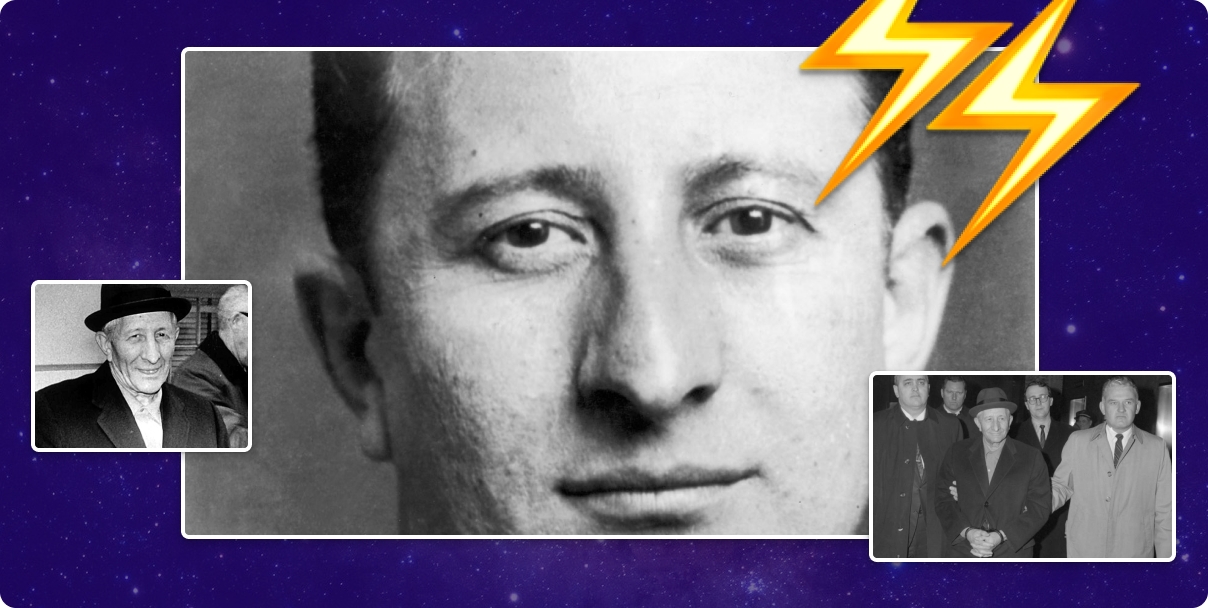
Carlo Gambino rose from a Sicilian immigrant stowaway to become the most influential and respected boss in the history of the American Mafia. Small in stature, with a prominent nose and an almost-permanent friendly grin that disarmed those around him, he maintained a quiet, understated demeanor throughout his criminal career. Beloved by his own men and many fellow godfathers across the country, Gambino built alliances that extended far beyond New York, forging strong ties with Mob bosses in New England, New Jersey, New Orleans, Florida, Chicago, California, Pennsylvania, and Detroit. He led the crime family that eventually bore his name, dominated the Mafia’s governing Commission, and died peacefully of natural causes in 1976 at age 74.
Born on August 24, 1902, near Palermo in the Passo di Rigano neighborhood of Caccamo, Sicily, Gambino came from a family already tied to the Sicilian Mafia, known locally as the Honored Society. His parents were Tommaso Gambino and Felice Castellano. He had two brothers: Gaspare, who stayed clear of organized crime, and Paolo, who later joined what became the Gambino family. The Sicilian Mafia structure proved more organized and resilient than the often-confused Black Hand extortion rings in America. When Benito Mussolini’s crackdown drove many mafiosi out of Italy in the 1920s, figures like Gambino helped transplant and refine those networks in the United States.
At age 19, Gambino entered the United States illegally on December 23, 1921, stowing away aboard the SS Vincenzo Florio and disembarking at Norfolk, Virginia. He quickly made his way to New York City, where he joined his cousins, the Castellanos, and took a job with their small family trucking firm. By 1921 he had already been inducted as a “made man” into Cosa Nostra—sometimes described as an “original”—and aligned himself with a rising generation of younger Mafiosi known as the Young Turks. This group, influenced by leaders such as Lucky Luciano and Frank Costello, favored a more pragmatic and diverse approach to organized crime. They sought partnerships with non-Italian groups, including Jewish gangsters like Arnold Rothstein, Meyer Lansky, and Bugsy Siegel, in contrast to the older “Moustache Petes”—traditional Sicilian-born bosses who insisted on strict Old World codes of honor, limited dealings to fellow Sicilians or Italians from their own villages, and resisted modernization.
👊 The Castellammarese War and Rise Through the Ranks
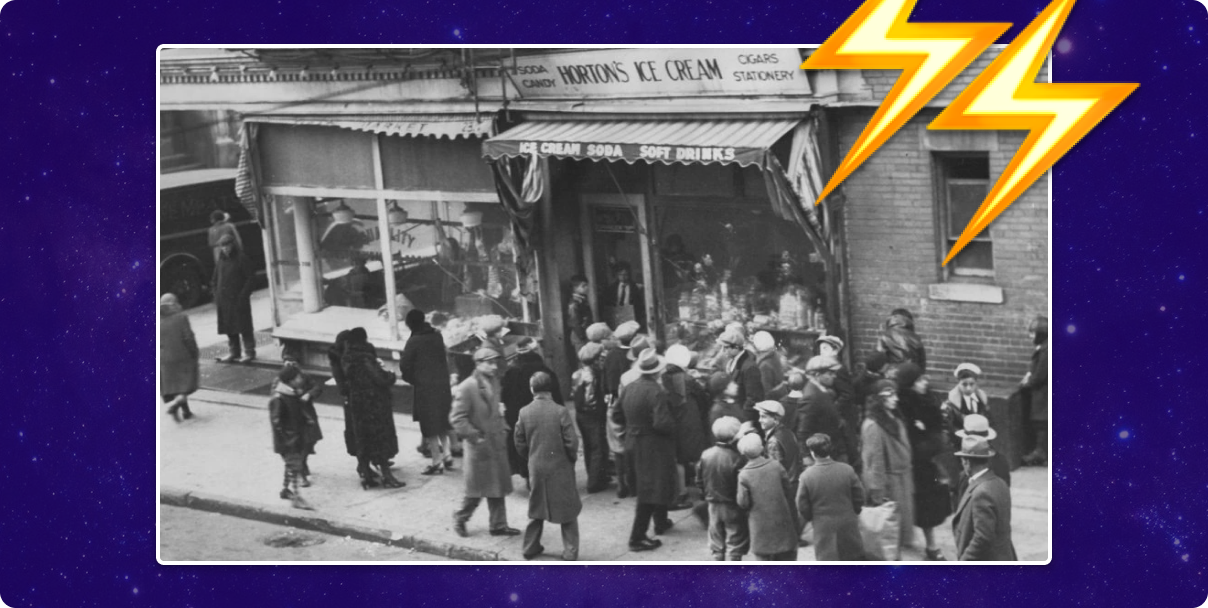
Gambino initially fell in with the organization of Joe Masseria, another Sicilian-born gangster. By the early 1930s, Masseria was locked in a brutal power struggle with Salvatore Maranzano, leader of the Castellammarese clan. The conflict, known as the Castellammarese War, involved assassinations and shifting loyalties across New York’s Italian underworld. Charles “Lucky” Luciano, seeing an opportunity, secretly allied with Maranzano and helped orchestrate Masseria’s murder on April 15, 1931, at a Coney Island restaurant. With Masseria eliminated, Maranzano briefly reorganized the New York gangs into the Five Families—headed by Luciano, Joe Profaci, Tommy Gagliano, Vincent Mangano, and himself—before declaring himself capo di tutti capi. That overreach proved fatal; Maranzano was killed on September 10, 1931, in a plot involving Luciano, Vito Genovese, and others. Luciano then helped establish the Commission as a governing body to mediate disputes and allocate territories, moving the American Mafia away from one-man rule.
After Masseria’s death, Gambino and his Castellano cousins became soldiers in the family headed by Vincent Mangano. Albert Anastasia, already a formidable power, served nominally as underboss. Gambino’s only significant prison time came in the late 1930s: arrested for tax evasion tied to a million-gallon illegal distillery in Philadelphia, he served 22 months at Lewisburg federal penitentiary. In 1951, Mangano and his brother Philip were murdered—Philip’s body was found near Sheepshead Bay, while Vincent’s was never recovered. Anastasia, with support from Costello (then leading the Luciano family after Genovese had fled to Italy), succeeded Mangano as boss.
🔭 Seizing Power: The 1957 Murders and Apalachin
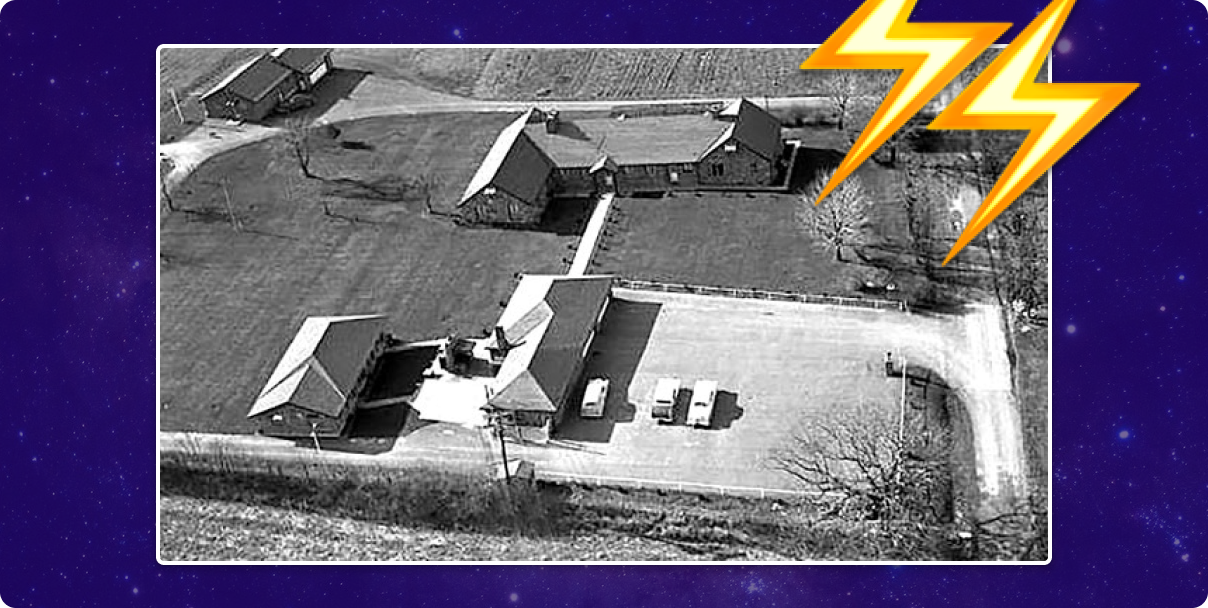
By the mid-1950s, tensions simmered again. In 1957, Genovese moved against Frank Costello and Anastasia, enlisting Gambino, who was then Anastasia’s underboss. On May 2, 1957, Vincent Gigante attempted to kill Costello outside his apartment; the shot grazed him but Costello survived and soon stepped back. Genovese and Gambino then arranged Anastasia’s murder. On October 25, 1957, gunmen—reportedly including Joseph “Crazy Joe” Gallo, assigned through Joe Profaci—shot Anastasia to death in the barbershop of the Park Sheraton Hotel in Midtown Manhattan. Gambino took control of the Mangano family, which was soon renamed the Gambino crime family. He appointed Joseph Biondo as underboss, later replaced by Aniello Dellacroce in 1965.
That same year, Gambino attended the infamous Apalachin Meeting at Joseph Barbara’s estate in upstate New York, a gathering of American and Sicilian mob leaders to discuss gambling, narcotics, and garment-industry rackets. The meeting was raided by police, though Gambino avoided arrest. Shortly afterward, Genovese was implicated in a narcotics conspiracy partly engineered with Gambino’s help; he received a 15-year sentence in 1959 and died in prison in 1969. With Genovese sidelined, Gambino assumed effective control of the Commission, solidifying his position as the most powerful figure in organized crime.
🏘️ Leadership, Alliances, and Traditional Rackets
Under Gambino’s leadership, the family grew to approximately 500 soldiers and more than 1,000 associates. He cultivated profitable rackets in labor unions, particularly on the New York and New Jersey waterfronts, at what is now John F. Kennedy Airport, in trucking, construction, and the garment industry. The family also profited from bookmaking, loansharking, hijacking, and extortion, while expanding white-collar schemes. Gambino explicitly discouraged narcotics trafficking among his members, enforcing a “deal and die” policy; he feared the lengthy sentences would encourage cooperation with authorities. He preferred traditional, lower-risk enterprises that allowed the organization to maintain a lower profile.
In 1962, Gambino strengthened his alliance with Tommy Lucchese when his oldest son, Thomas, married Lucchese’s daughter Frances in a lavish wedding attended by more than 1,000 guests. The union helped the two families jointly control key airport operations and much of New York’s organized crime activity. Gambino also navigated internal threats. In 1963, Bonanno family boss Joseph Bonanno plotted to assassinate Gambino, Lucchese, Stefano Magaddino, and Frank DeSimone. Joseph Magliocco was tasked with carrying out hits on Gambino and Lucchese and delegated the contract to Joseph Colombo. Colombo instead revealed the scheme to the intended targets. Bonanno fled to Montreal, Magliocco confessed, paid a $50,000 fine, and retired; Colombo received the Profaci family as a reward and renamed it Colombo.
🗺️ Final Years, Succession, and Legacy
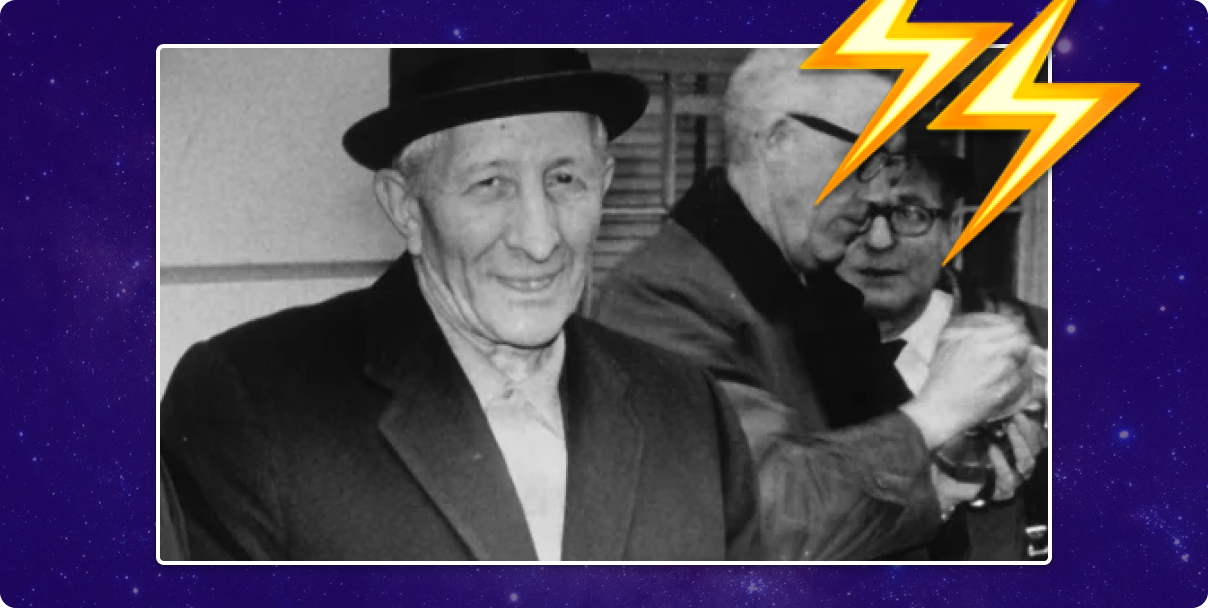
Gambino lived relatively modestly for a man of his stature, maintaining a Brooklyn apartment and a two-story brick waterfront home in Massapequa, Long Island. He married his cousin Catherine Castellano; she predeceased him in 1971. The couple raised four children: sons Thomas, Joseph, and Carlo Jr., and daughter Phyllis (who married into the Sinatra family). Paul Castellano, another cousin and brother-in-law, served as a high-earning captain and eventual successor.
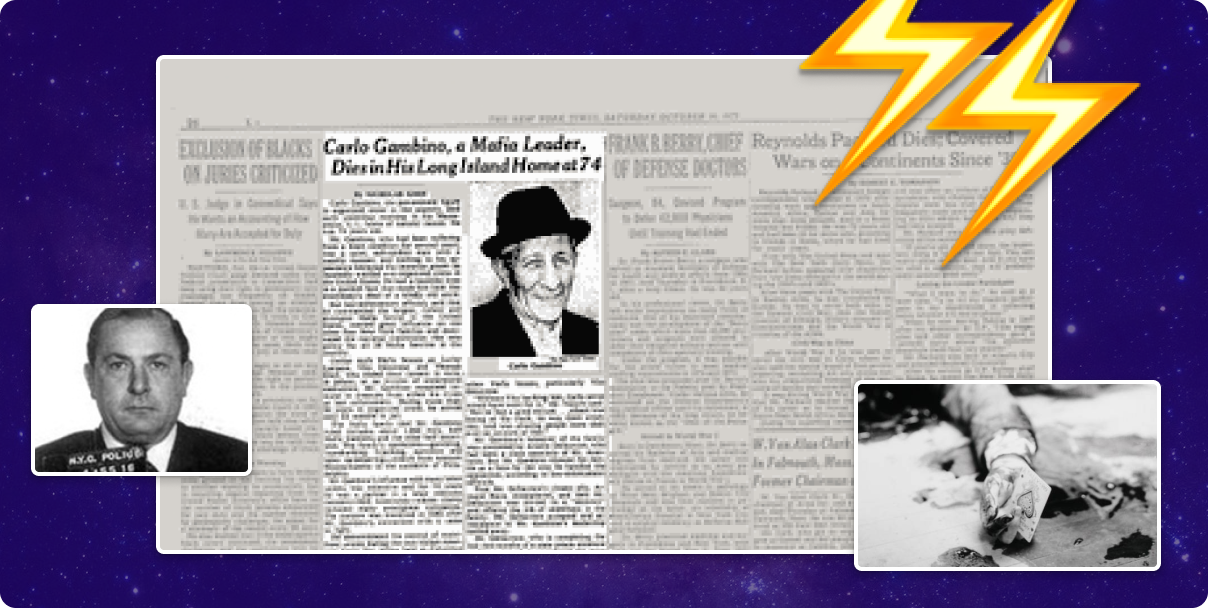
In his final years, Gambino faced health problems, including heart disease. He controversially bypassed his longtime underboss Aniello Dellacroce—respected for traditional street operations—in favor of his brother-in-law Paul Castellano, whom he believed would steer the family toward more corporate-style, white-collar rackets. This decision created factions that later destabilized the organization. On the evening of October 14, 1976, Gambino watched the New York Yankees clinch the American League pennant. He died early the next morning, October 15, 1976, of a heart attack at his Massapequa home.
His wake was held at Cusimano & Russo Funeral Home, followed by a funeral Mass at the Church of Our Lady of Grace in Brooklyn on October 18. He was entombed in the family mausoleum at St. John Cemetery in Queens. Several hundred mourners attended, observed by plainclothes police and FBI agents. The procession included 13 limousines and a flower car. Law enforcement at the time acknowledged his immense, decades-long influence over the largest and richest Mafia family in the country and his quiet dominance of the national Commission.
Gambino left behind a vast criminal enterprise that had reshaped the American Mafia into a more structured, nationwide network. His preference for discretion, strategic alliances, and traditional rackets defined an era, even as the succession he engineered set the stage for future turmoil, including the violent takeover by John Gotti after Castellano’s 1985 murder. Through calculated moves across more than five decades, Carlo Gambino had become the understated but undisputed power at the center of organized crime in the United States.

♠️ The Code of Honour: Origins of the Onorata Società
The term “Honoured Society” (Onorata Società) originated in 19th-century Naples with the Camorra, referring to organized crime groups that upheld a strict code of honour. Central to this code was omertà — the vow of silence and refusal to cooperate with police or authorities on internal matters. By the late 19th century, the label extended to Sicilian Cosa Nostra and Calabrian ’Ndrangheta due to their similar emphasis on honour, loyalty, and independence from the state. It portrayed these groups as brotherhoods of “men of honour” defending traditional values in a distrustful society.
🗡️ Terror by Letter: The Black Hand Extortion Racket
The Black Hand (Mano Nera) was a loosely organized extortion scheme that terrorized Italian immigrant communities in the United States from around 1903 to the mid-1920s. Criminals, mainly from Sicily, Naples, and Calabria, sent threatening letters decorated with a black hand, skull, dagger, or noose, demanding money under threat of violence, kidnapping, arson, or murder. Successful immigrants were primary targets; even opera star Enrico Caruso paid thousands. The racket peaked in New York, Chicago, and other cities with large Italian populations but lacked formal structure. It faded in the 1920s as more organized Mafia families emerged and took control of rackets.
🍝 Birth of Cosa Nostra: The Sicilian Mafia’s Rise
The Sicilian Mafia, known as Cosa Nostra (“Our Thing”), arose in mid-19th-century western Sicily amid weak state control after Italian unification. It began as informal protectors offering arbitration, debt recovery, and “protection” in rural areas, especially citrus groves and cattle farming. Structured into autonomous cosche (families) bound by omertà, initiation rituals, and a code of honour, it evolved into a powerful network involved in extortion (pizzo), politics, and later drug trafficking. Mussolini’s 1920s crackdown temporarily suppressed it, but it revived after World War II and influenced the American Mafia through mass emigration.
Help us grow by advertising your business in our newsletter and reaching an engaged community.
