
⚡ThirdSpace BUZZ: Architectural Icons to the Shadows of the Calabrian 'Ndrangheta and Australia's Honoured Society
The lasting legacy of visionary Danish design alongside the complex history of international organized crime in Australia.
ThirdSpace BUZZ is an edgy newsletter on whatever the fuck I want.
I figured since it was called ThirdSpace and it started based on the idea of “third spaces” why not throw some architecture into the mix.
In this episode I was feeling some heat down under.
We explore the architectural triumph of the Sydney Opera House alongside the hidden, historical influence of the Calabrian ‘Ndrangheta crime syndicate.
Oi, oi, oi.
🌶️

Sponsored by:
Help us grow by sponsoring our newsletter and reaching an engaged community.


Silence is a source of great strength.
— Lao Tzu

🏘️ Jørn Utzon’s Visionary Sydney Landmark

The Sydney Opera House is a masterpiece of 20th-century expressionist architecture, located on Bennelong Point in Sydney, Australia.
Danish architect Jørn Utzon won an international design competition in 1957, with his vision inspired by natural forms like shells and palm leaves.
Construction began in 1959, but the project faced significant cost and scheduling overruns, eventually leading to Utzon’s resignation in 1966.
An Australian team led by Peter Hall subsequently completed the interiors, and Queen Elizabeth II formally opened the building on October 20, 1973.
Today, this UNESCO World Heritage Site is celebrated globally and remains one of the world’s most iconic performing arts venues.
⚡ Calabrian 'Ndrangheta and Australia’s Honoured Society

The Honoured_Society, or L’Onorata Società, represents a significant chapter in the history of organized crime in Australia, specifically tied to the Calabrian ‘Ndrangheta. Often overshadowed in media by the Sicilian Mafia, this organization established a complex, deeply rooted presence.
Origins
The roots of the Honoured Society trace back to the rugged Aspromonte mountains of Calabria, Italy. The ‘Ndrangheta, the parent organization, is built upon a foundation of blood ties and a rigid code of silence known as omertà. Unlike other criminal syndicates that might recruit based on skill, the Honoured Society is traditionally familial, making it exceptionally difficult for law enforcement to penetrate.
Migration from Southern Italy to Australia in the early 20th century provided the vehicle for the organization’s expansion. While the vast majority of Italian immigrants were seeking honest work and a better life, a small number of “men of honour” brought the structural traditions of the ‘Ndrangheta with them. By the 20s and 30s, the society had begun to exert influence in Queensland and Victoria, often through extortion and “protection” rackets targeting their own community.
Market Monopolies
The most notable area of influence for the Honoured Society was the wholesale produce markets, specifically the Queen Victoria Market in Melbourne. The organization realized that controlling the distribution of fruit and vegetables provided a steady stream of income and a method to launder money.
By intimidating growers and wholesalers, they could control prices and dictate who was allowed to operate. This grip on the “stomach of the city” was not merely about profit; it was about power. Those who resisted the society’s demands often faced “black hand” tactics—threats, property destruction, or physical violence.
Escalation and Conflict
The 60s marked a period of increased visibility and violence for the group. As the organization grew in wealth, internal tensions rose regarding leadership and the division of spoils. This era saw a series of “Market Murders” in Melbourne, where several figures associated with the produce trade were assassinated in broad daylight. These killings were professional and served as reminders of their reach.
The most prominent leader during this time was Domenico “The Pope” Italiano, who oversaw much of the Melbourne operations. Following his death, a power vacuum led to further instability. The violence eventually forced the Australian public and government to acknowledge that a sophisticated, international criminal network was operating within its borders.
The Griffith Connection and Donald Mackay
In the 70s, the Honoured Society shifted much of its focus toward the illicit drug trade, specifically large-scale marijuana cultivation in the Riverina district of New South Wales. The town of Griffith became the epicenter of this activity. The organization utilized the region’s vast agricultural lands and irrigation systems to grow crops worth millions of dollars.
This period led to one of the most infamous moments in Australian criminal history: the disappearance of Donald Mackay. Mackay was a local businessman and anti-drug campaigner who had been providing information to the police regarding the marijuana plantations. In July 1977, he vanished from a hotel car park in Griffith. While his body was never found, the Woodward Commission concluded that he had been murdered by “hitmen” acting on behalf of the Honoured Society.
The Woodward Royal Commission was a turning point. It officially named several high-ranking members of the society and detailed the scale of their operations. The investigation revealed that the society was not a loose collection of thugs, but a sophisticated hierarchy with international links back to Calabria. It highlighted how the organization used legitimate businesses, such as wineries and transport companies, as fronts.
Modern Day
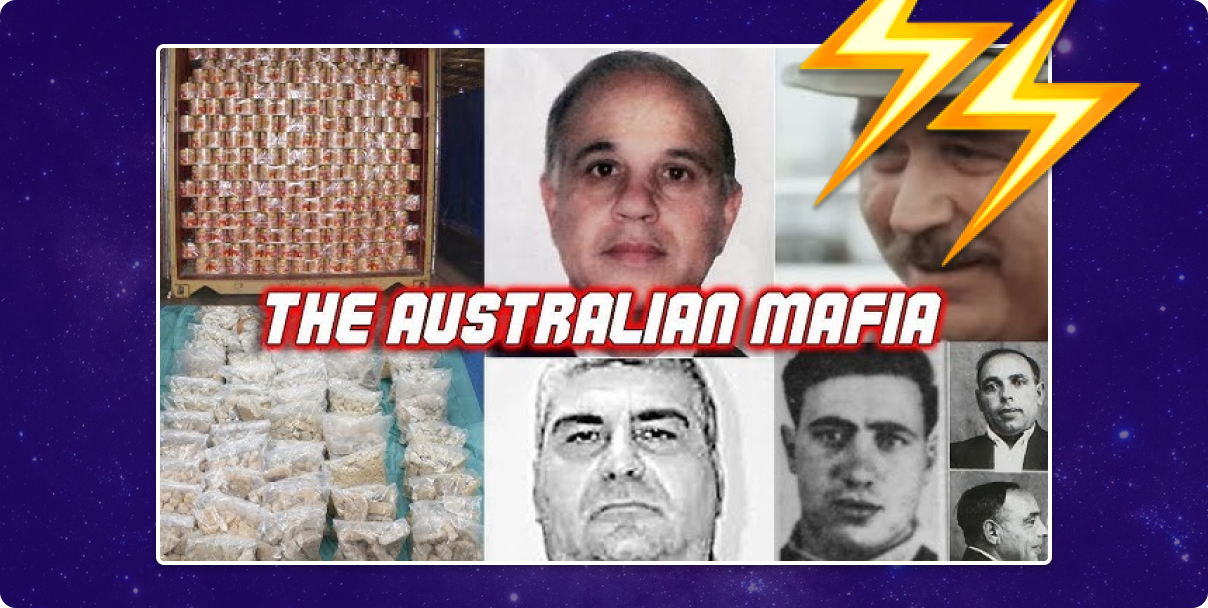
While the “Honoured Society” name is less frequently used today, replaced by the broader term ‘Ndrangheta, the organization remains active. Modern operations have transitioned from local extortion and marijuana to the high-stakes world of international cocaine and MDMA trafficking. They have also moved into sophisticated financial crimes, using global banking systems to move assets.
Law enforcement agencies, including the Australian Federal Police (AFP), continue to coordinate with Italian authorities to disrupt these cells. Recent operations have shown that the ‘Ndrangheta still utilizes the same familial structures and codes of silence that allowed their ancestors to establish a foothold in Australia.
The legacy of the Honoured Society serves as a reminder of the enduring nature of traditional organized crime and its ability to adapt.

Help us grow by advertising your business in our newsletter and reaching an engaged community.

Interesting contrast between architecture that becomes a national symbol and underground networks that quietly shape history from the shadows