
⚡ThirdSpace BUZZ: 5 Impactful Truths Behind the Real "French Connection" and SPECTRE
Much of the DNA for the Special Executive for Counter-intelligence, Terrorism, Revenge and Extortion (SPECTRE) was drawn from reality.
ThirdSpace BUZZ is an edgy newsletter on whatever the fuck I want.
The world of James Bond is often viewed as a playground of impossible gadgets and theatrical villains.
However, much of the DNA for the “Special Executive for Counter-intelligence, Terrorism, Revenge and Extortion” (SPECTRE) was drawn from the gritty reality of mid-century international crime. Ian Fleming looked to a very real, dangerous network operating out of Marseille to find his cinematic inspiration.
Many of the most unbelievable movie tropes were actually inspired by the shadow architects of the Mediterranean.

Sponsored by:
Help us grow by sponsoring our newsletter and reaching an engaged community.


When your opponent expands, I contract . . . And when there is an opportunity, I do not hit—it hits all by itself.
— Bruce Lee

⚡ The “French Connection” a Protean Myth
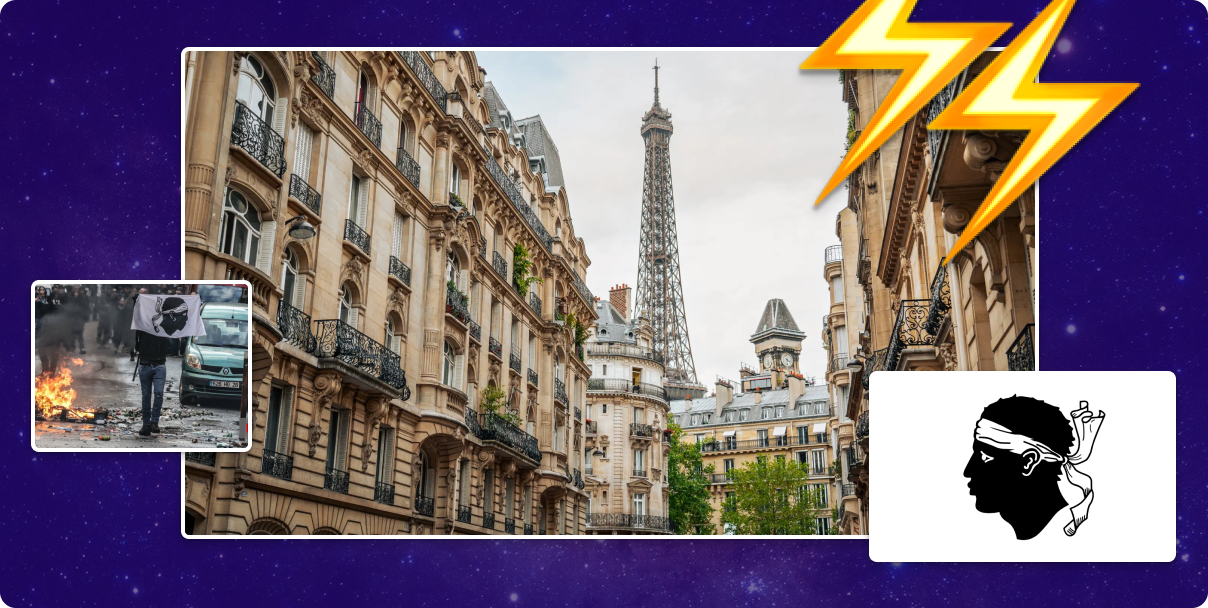
The term “French Connection” was not a name the criminals used for themselves; it was popularized by the 1971 movie based on Robin Moore’s investigative book. While the public imagined a centralized, corporate empire, the reality was a “protean” and decentralized arrangement of rival Corsican families. This fragmentation made the network incredibly resilient, as removing a single “boss” did not collapse the overarching trade. Instead, the decentralized families simply realigned and reconfigured whenever law enforcement applied pressure to a specific node.
“The Marseille network was not a hierarchical organization under a single command, however, because the Corsican Mafia shared certain common characteristics with their Sicilian and Italian-American counterparts. Its hierarchy was built on authority and prestige, the principle of pursuing vendettas and, above all, organizing themselves around competing families.”
👊 The Alleged Mob Contract on JFK
Startling testimony from French trafficker Christian David suggests a direct link between the Marseille mob and the assassination of President John F. Kennedy. David claimed that Antoine Guerini, leader of the Corsican Mafia, was asked to supply high-quality assassins for an operation inside the United States. The meeting reportedly took place in Guerini’s private office located above his club at the Old Port of Marseille. Guerini used a chilling euphemism for the President, describing the target as "the highest vegetable." While David refused the job, he alleged that the contract was ultimately accepted by the notorious assassin and trafficker Lucien Sarti.
🔭 SPECTRE’s Real-World Board of Directors
Ian Fleming modeled SPECTRE’s executive board on six pillars of international crime to create an “apolitical” enemy. He feared that using contemporary Cold War villains would cause his stories to look “dated” as global alliances shifted. These pillars included the Nazi Gestapo, the Soviet SMERSH, Yugoslavia’s OZNA, the Italian Mafia, and the Corsican Unione Corse. The final pillar, a Turkish heroin branch known as KRYSTAL, was composed of former members of RAHIR. RAHIR was a private intelligence agency previously operated by the master of SPECTRE, Ernst Stavro Blofeld.
The Gestapo (Former Nazi members)
SMERSH (Soviet counter-intelligence)
OZNA (Yugoslav secret police)
The Italian Mafia
The Unione Corse (The real-life Corsican Mafia)
KRYSTAL (Staffed by former agents of Blofeld’s RAHIR)
🏘️ The "Paw Patrol" and the "Mafia Books"
In the early days of federal drug enforcement, the Federal Bureau of Narcotics (FBN) utilized rigorous investigative rituals. New agents were forced to memorize “National List Violators” volumes, which were commonly known as the “Mafia Books.” These books contained the names, aliases, and specific habits of the era’s most dangerous figures. Agents often tracked these criminals at “oasis” locations like Paolucci’s in Little Italy, where the Mob and the law dined in the same room. Dr. John Coleman even recalled bumping into “Frankie the Bug” in the restroom just one day after memorizing his file.
“I was probably a member of one of the first real paw patrols, called the Federal Bureau of Narcotics.”
🏘️ The Hydraulic Trap—Why the 1972 Victory was "Illusory
The 1972 "victory" over the Marseille labs was catalyzed by Turkey consenting to go out of the opium business, which dried up the supply of morphine. However, historians and former agents now describe this success as a "Hydraulic Exercise" of enforcement. When pressure was applied to Marseille, the heroin trade did not vanish; it simply dissipated and emerged in more violent territories. This inadvertent vacuum allowed hyper-violent cartels like Pablo Escobar’s and Asian networks to seize control of the global market. The merciless war on heroin in France eventually led to a more dangerous landscape of synthetic substitutes and hyper-violent narco-terrorism.
The legacy of the Marseille underworld remains a masterclass in the geopolitics of trade and reconfiguration. As highlighted by researchers like Alain Labrousse, global crime networks function as evolving structures rather than fixed entities. The Unione Corse provided the template for the modern syndicate that operates across borders without regard for political ideology. This enduring history leaves us with a haunting question for the future of law enforcement. Can global crime networks ever truly be destroyed, or do they simply reconfigure like the shadow architects of Marseille?

Help us grow by advertising your business in our newsletter and reaching an engaged community.
